

For multi-billion-dollar global investment vehicles, discovering a governance gap during an annual audit is a catastrophic failure. Sovereign wealth funds and large institutional allocators no longer accept reactive compliance, as evidenced by data cited in multiple surveys. These investors demand predictive risk architecture and operational due diligence technology wired directly into the GP’s daily workflow. A manager relying on spreadsheets and manual oversight fails the institutional fund compliance review before the first capital call is drafted.
The 2024 EY Global Alternative Fund Survey, which polled 200 institutional investors including pension funds, sovereign wealth funds, and family offices, confirms that over 75% of investors now expect GPs to demonstrate automated risk monitoring as a baseline qualification rather than a value-added differentiator. The capital side is moving in lockstep as well. The FT Longitude and SAS global risk management survey of 300 senior risk executives across 25 countries found that 75% of banks plan to increase investment in risk technology infrastructure, up from just 51% in 2021. The global risk assessment framework has fundamentally repriced what institutional-grade means. Technology must surface the risk before the allocator ever sees it. This calls for GPs to embrace digital-first, high-tech compliance frameworks to keep pace with competitors.
How Algorithmic Monitoring Surfaces Hidden Risk
Ever since the launch of advanced AI tools, institutional ODD teams have become aggressive technology operators. They deploy machine-readable document parsers, service provider risk feeds, and even real-time regulatory mapping tools to evaluate a GP’s operational infrastructure. The SBAI 2024 Operational Due Diligence Practices Survey confirms the discipline now sits at the inception of every new manager relationship, with 77% of institutional allocators mandating a full ODD review before capital is committed. The verdict is delivered before the GP is even aware that the due diligence process has commenced. To survive this enhanced scrutiny, the manager’s internal architecture must mirror the allocator’s audit stack.
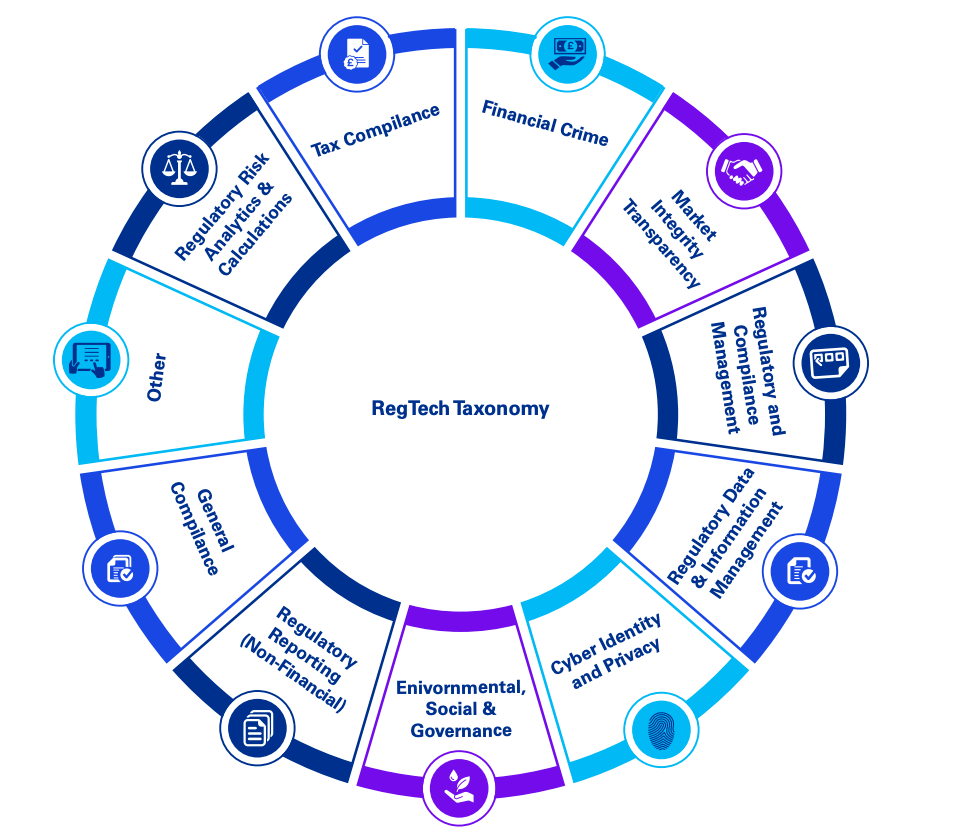
Secure data rooms and quarterly compliance memos no longer qualify as viable options. Modern institutional fund compliance requires automated regulatory horizon scanning that flags rule changes across SEC, ESMA, FCA, and MAS jurisdictions simultaneously. It demands continuous background tracking on fund administrators, prime brokers, and auditors so that a service provider’s regulatory action surfaces internally within hours, not at the next annual review. It requires algorithmic document parsing across LPAs, side letters, and subscription documents to identify conflicts of interest the moment they form. KPMG’s RegTech research highlights that any large-scale GP must focus on four key operational areas.
- Regulatory intelligence
- Reporting solutions
- Compliance process management
- Risk and data management
What is interesting to note is that predictive compliance analytics replace the analyst spreadsheet at every layer of this stack.
Exhibit 1: KPMG RegTech Taxonomy wheel
Source: KPMG
The economics of legacy systems are now indefensible. KPMG also documented that KYC and AML violations alone drove an 87% increase in non-compliance penalties between 2021 and 2024. ODD software platforms that consolidate counterparty data, automate transaction monitoring, and run real-time anomaly detection are no longer optional infrastructure. They are the difference between a clean ODD pass and a quiet rejection.
The Financial ROI of Automated Compliance
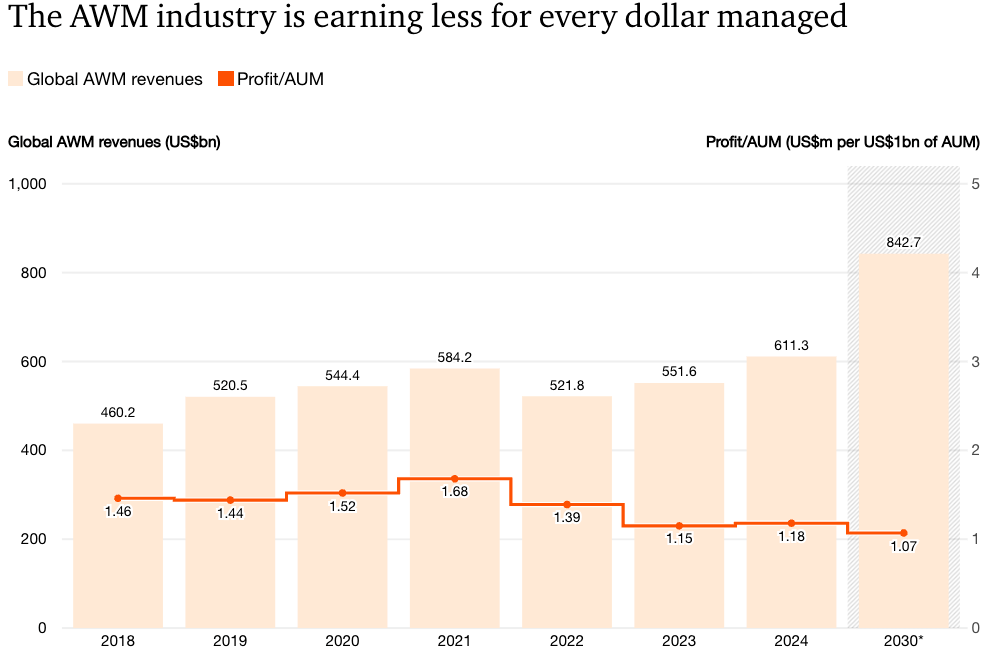
Amid the changing industry conditions discussed earlier, compliance can no longer be thought of as a back-office cost center operation. It is a yield protection mechanism. PwC’s 2025 Global Asset and Wealth Management Report makes the math easy to digest. Profit as a share of AUM has already fallen by ~19% since 2018, and PwC projects another 9% decline by 2030. Operational costs are forecast to reach $2.81 million per $1 billion of AUM by the end of the decade. For a $5 billion fund, that translates to over $14 million in annual operating expenditure with no relief on the horizon. Throwing more compliance headcount at the problem accelerates margin destruction. It does not solve it.
Exhibit 2: Profit/AUM is in a downward trend
Source: PwC
Predictive compliance analytics reverse this trajectory. Automating regulatory horizon scanning, document parsing, and counterparty monitoring strips out the manual labor that drives operational drag. PwC found that 69% of institutional investors in 2025 signaled they are likely to allocate capital specifically to asset managers building advanced technology capabilities. Tech infrastructure is now a fundraising lever. The same investment that lowers the manager’s compliance overhead simultaneously expands the addressable LP universe. This marks a win-win situation for GPs.
The downside of inaction is documented as well. EY’s January 2025 operational risk research found that European financial institutions absorbed €15.2 billion in operational risk-related losses in a single reporting cycle, driven by inadequate internal processes, system failures, and weak control environments. These are the exact failure modes ODD teams scan for. A manager that surfaces these vulnerabilities internally through automated monitoring contains the loss before it reaches the income statement. A manager that does not, prints the loss for allocators to find, eventually leading to loss of income for the investment vehicle.
PwC also found that 57% of institutional investors are likely or very likely to replace a manager purely on cost grounds. Automated compliance is no longer a defensive expense. It is the operating leverage that determines whether a fund holds its capital base or hemorrhages it.
Navigating Global Regulatory Divergence
Compliance teams working with GPs are facing the massive challenge of meeting different regulatory requirements in different jurisdictions. KPMG’s 2025 Evolving Asset Management Regulation Report tracked over 200 individual regulatory developments across nearly 30 jurisdictions in a single year. The report is direct on the consequences. Regulatory divergence makes it structurally difficult for global asset managers to replicate strategies consistently, which drives up compliance costs and operational complexity in tandem. Manual reconciliation of these rulebooks is practically impossible at an institutional scale.
The pressure compounds quickly in practice. The EU’s UCITS and AIFMD frameworks faced material amendments effective April 2026. The European T+1 settlement transition is locked for October 2026, forcing fund unit lifecycle redesigns for managers still operating on T+3. The SEC continues phased Form PF amendments. Singapore’s MAS rolled out new internal controls guidelines in June 2025. Jim Suglia, KPMG International’s Global Head of Asset Management, confirms the divergence is now a defining feature of the landscape rather than a temporary friction. A compliance team trying to track this manually across SEC, ESMA, FCA, MAS, and DFSA mandates is structurally outmatched.
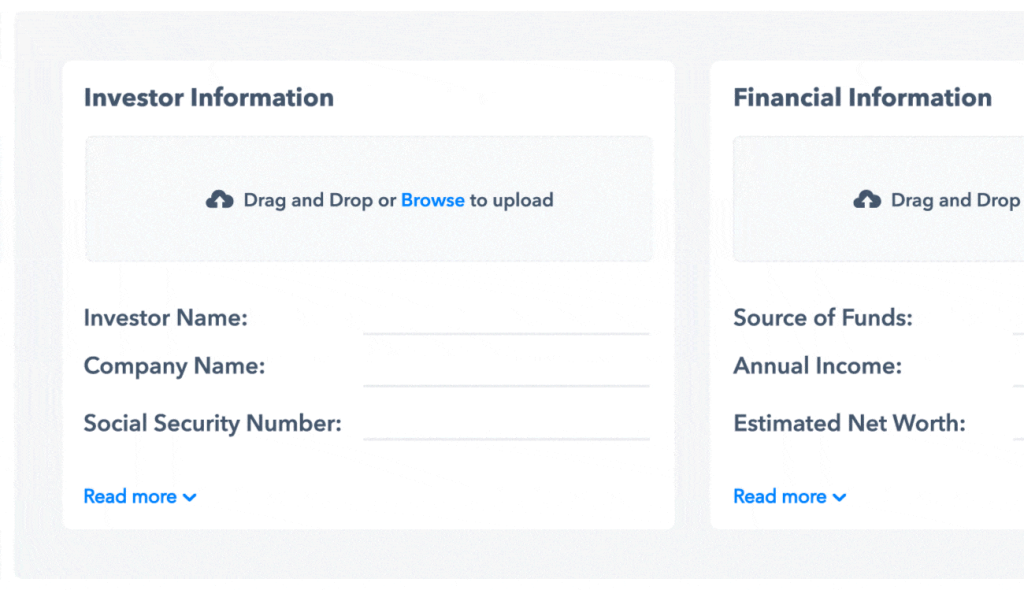
This is where centralized risk architecture becomes non-negotiable. A unified technology platform absorbs the divergence by mapping conflicting rules into a single risk dashboard, flagging gaps as they form rather than at the next audit cycle. It delivers genuine LP operational transparency, which is the layer institutional allocators now demand before they commit. RAISE operates as this architectural foundation, consolidating cross-jurisdictional compliance signals into one institutional control environment. Global scale stops being a compliance liability the moment the infrastructure is built to handle it. This is where the RAISE Compliance Risk Assessment product excels.
Exhibit 3: AI-driven document processing on RAISE CRA
Source: RAISE
Conclusion
The institutional fund compliance environment has been repriced. Sovereign wealth funds, pension boards, and large-cap allocators no longer view operational due diligence technology as overhead. They view it as the qualifying signal that determines whether a GP is ready to raise funds. Legacy systems and manual oversight destroy enterprise value at the exact moment the allocator is forming a verdict.
This has created a need for a unified, predictive risk architecture that transforms compliance from a cost center into a capital-raising weapon. It compresses operational drag, satisfies cross-jurisdictional supervisory demands, and delivers the LP operational transparency that converts ODD reviews into capital commitments. The back office now dictates the speed of institutional fundraising.
Secure your institutional infrastructure and accelerate capital deployment with predictive operational risk monitoring from RAISE.